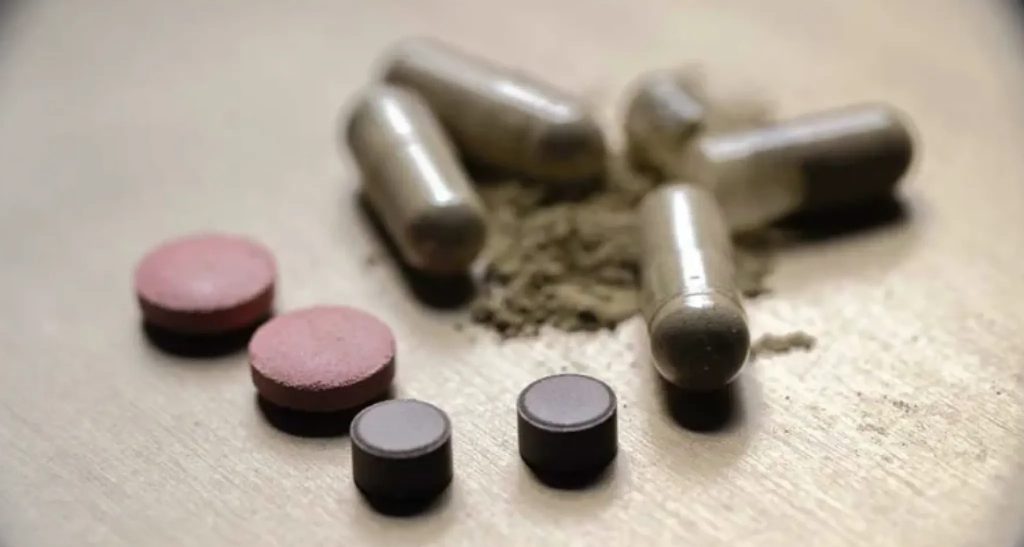
Kari Galassi walked into a gas station half a mile from her Hinsdale home and found concentrated kratom products in packaging that resembled Skittles and other candy.
Galassi, a DuPage County Board member, brought that discovery to the Oct. 27 county board meeting. She said the products, including concentrated 7-hydroxymitragynine (7-OH) tablets, were advertised in neon lights outside the store and sold where children shop.
"Dangerous products, including concentrated 7-OH opioids, packaged to resemble candy and sold right where our children shop," Galassi wrote in a letter published by The Hinsdalean.
She said she first learned about kratom after news reports that packaged kratom products were found following the deaths of two University of Mississippi students in September. Galassi acknowledged that kratom's role in those deaths remains under investigation.
Oxford, Mississippi, police said packaged kratom "sold from a retail store" was found during both investigations, ABC News reported. But police also said they did "not have confirmed information indicating that kratom or any other substance was a contributing factor in either death." Autopsy and toxicology reports had not been made public as of mid-October.
Galassi urged collaboration among public health officials, law enforcement, municipal leaders and state legislators on protections including product testing, warning labels, packaging restrictions and potential bans.
Concentrated 7-OH products differ from traditional kratom leaf, Galassi wrote, and carry risks including addiction and slowed breathing. The FDA has warned that kratom and concentrated 7-OH products can carry risks including dependence and serious adverse effects.
Neighboring communities already acting
Two DuPage County cities have already banned kratom sales. The Darien City Council approved an ordinance banning kratom sales at its Oct. 19 meeting. Naperville's city council voted 8-0 on Sept. 1 to prohibit retail kratom sales, effective Oct. 1, as first reported by the Chicago Tribune.
Wheaton adopted its own ban in April. Winnetka, Plainfield, Minooka, Normal and Bloomington have also banned kratom sales, according to Darien's ordinance summary.
Under the Illinois Kratom Control Act, selling kratom to anyone under 18 is prohibited. State law does not broadly regulate product strength, labeling or purity for adult sales. Two bills introduced during the 2026 spring legislative session, one proposing a statewide ban and another a consumer protection framework, did not advance.
Federal ban still pending
Concentrated 7-OH is not yet a federally controlled substance. The DEA published a notice on July 6 of intent to temporarily place 7-OH above a specified threshold in Schedule I. On Oct. 9, the Justice Department announced the DEA would withdraw that notice and start over with a new rule, set to publish Oct. 14. The earliest the new ban could take effect is Nov. 13.
Three related synthetic compounds, mitragynine pseudoindoxyl, MGM-15 and MGM-16, have been in Schedule I since Aug. 25.
The DuPage County Health Department has taken the position that kratom is an opioid, is addictive and should be banned in Illinois, according to Darien's ordinance materials. Whether the Village of Hinsdale or its police department have considered local restrictions is not addressed in available records.
Hinsdale public safety week ahead
No kratom-related public meetings, Village Board agenda items or community forums specific to Hinsdale have been announced in available records for the coming week. Residents seeking information about kratom products can contact the DuPage County Health Department or file records requests with the Hinsdale Police Department under the Illinois Freedom of Information Act (5 ILCS 140).