The stone bridges and timber shelters along Salt Creek that Hinsdale families have hiked past for decades now carry federal historic protection.
The U.S. Department of the Interior added 177 acres of Fullersburg Woods Forest Preserve in Oak Brook to the National Register of Historic Places, the DuPage County Forest Preserve District announced Thursday, June 25, 2026. The district, now led by executive director Anamari Golf Dorgan, owns 26,000 acres across DuPage County. The designation recognizes the Civilian Conservation Corps craftsmanship that shaped the preserve between 1933 and 1938.
"Fullersburg Woods is one of the forest preserve district's most popular destinations, and this designation recognizes the history and architecture that continue to make it special," said Daniel Hebreard, DuPage County Forest Preserve District Board president. "Visitors can experience many of the same landscapes, trails and shelters that have drawn people here for generations."
The preserve sits at 3609 Spring Road, just across Salt Creek from Hinsdale's western neighborhoods. For residents who walk the trails, the designation means the CCC-built Rainbow Bridge, the 1936 boathouse (now the nature education center), and the hand-quarried stone shelters will be formally considered in any future federally funded project that could alter the landscape.
What the CCC veterans built
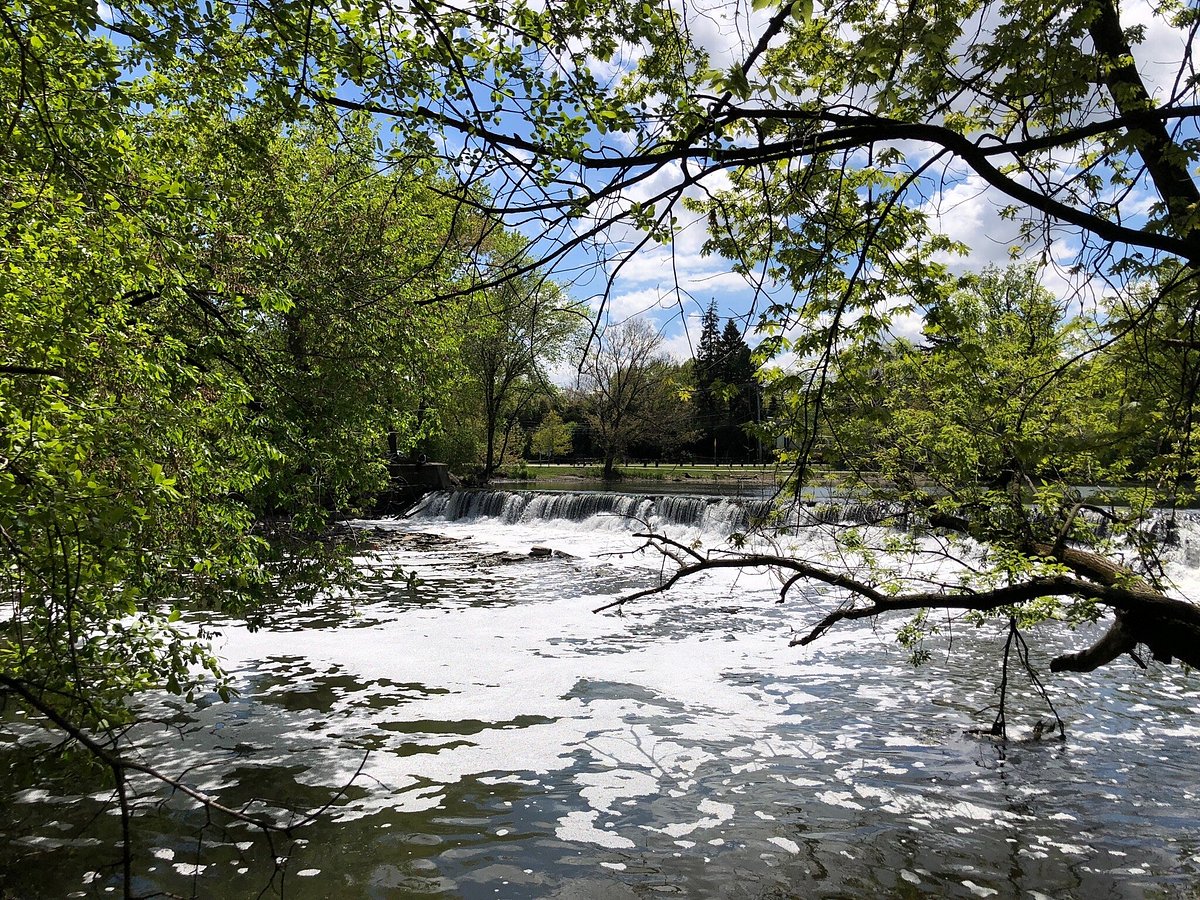
Unlike most CCC camps staffed by men ages 18 to 25, Camp V-1668 was composed entirely of World War I military veterans. Over 4½ years starting in December 1933, they transformed 65 acres of Salt Creek bottomland into a network of trails, bridges, picnic shelters, a boathouse, and a concession stand. They graded Salt Creek itself and built islands within it.
The men quarried stone from Rocky Glen (now Waterfall Glen Forest Preserve) and used local timber to build in a style called "parkitecture," the National Park Service rustic aesthetic that made structures blend into their surroundings. The improvements were designed by G.F. Ingalls and built under Chance S. Hill, the district's supervising landscape architect.
The boathouse, completed in 1936, features a masonry foundation with timber framing, a large chimney with fireplaces on both the interior and exterior, and a dedication plaque from that year. In summer 2020, district maintenance staff stripped decades of paint from the logs, sanded them, and applied a stain matching the original 1936 finish, revealing hand-tool marks hidden underneath.
What the designation does — and doesn't do
National Register listing does not restrict what a property owner can do with private resources. Because Fullersburg Woods is publicly owned by the Forest Preserve District, the designation primarily functions as formal federal recognition and may support future grant eligibility. It does require federal agencies to consider the impact of any federally funded or licensed project on the listed property under Section 106 of the National Historic Preservation Act.
The adjacent Graue Mill, an 1852 gristmill, has been on the National Register since 1975. Fullersburg Woods is the second listing for the site.
Hinsdale's own preservation push
The federal designation arrives as Hinsdale continues building its own preservation infrastructure. As of May 2026, 99 buildings sit on the village's Historically Significant Structures Property List, with two more expected to be added this summer, according to The Hinsdalean. Since the program launched in March 2023, the Village Board has approved nearly $246,000 in permit fee waivers, $160,000 in grants, and $137,000 in property tax rebates, generating more than $12 million in new construction.
A Thursday, June 25 Chicago Tribune report on Naperville's preservation shortfalls specifically cited Hinsdale's program as a model for other suburbs.